
Memory Against Oblivion
The Dog StarsHig’s storytelling, objects, poems, and rituals resist the idea that lost people and places should simply disappear.
increasing Bearing strength in each event
 decreasing
Bearing strength in each eventdecreasingA Book Kept Close
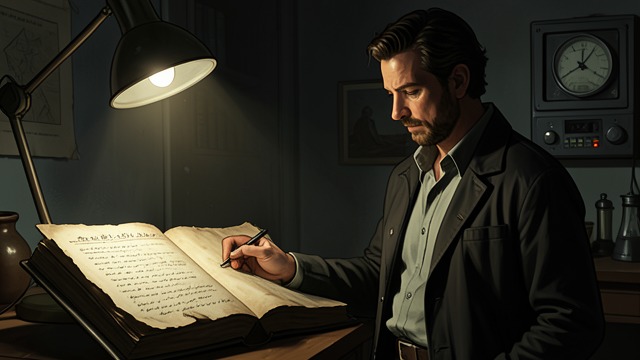
Poems as Keepsakes
A small library survives
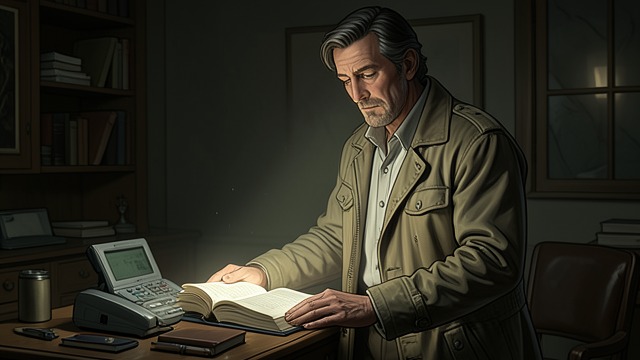
Hig carries poetry and returns especially to Stories That Could Be True. A poem’s absent callers echo his own attempts to reach other people.
Memory becomes practice
Reading does not restore the dead, but it lets Hig give form to longing. Keeping the book becomes one small resistance to a world stripped of witnesses.
The Star Constellations
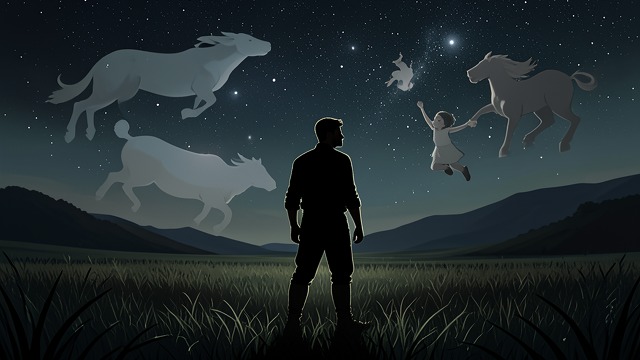
Making Figures from Absence
A private sky
Without his old star book, Hig invents constellations for animals, Melissa, and a child who was never born. The sky becomes a place for remembered lives.
Naming as connection
The invented patterns cannot change what happened. They let Hig continue addressing those who are gone rather than leaving them unnamed.
The Road to the Mountain
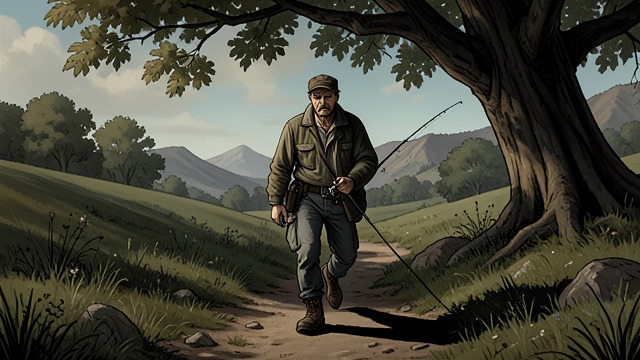
A Familiar Path Without Jasper
Walking through memory
Hig follows the trail he and Jasper have used for years. The route remains physically familiar but emotionally altered.
Remembering by movement
He thinks of fishing and earlier trips as he walks. Memory accompanies his body even when he wants to stop thinking about the past.
The Rancher’s Slides
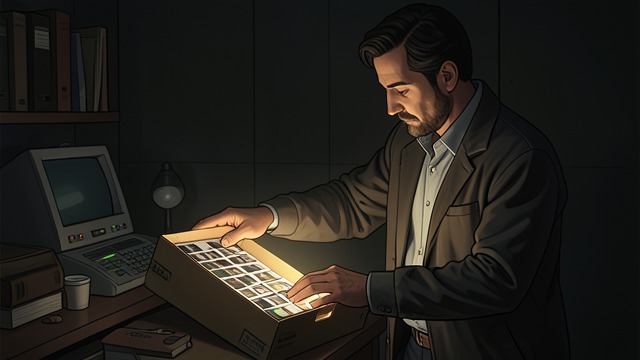
Pete’s Archive
A life recorded
Hig remembers Uncle Pete sorting and labeling slides as he approached death. The project first seems eccentric, then reveals itself as an attempt to revisit a life before it disappears.
A model for telling
Hig recognizes a similar impulse in his own narration. Stories preserve attention and relationship even when no audience is guaranteed.
A Poem at the End
The Question of Home
Words survive the journey
Hig recites a poem about being separated from home and remembering someone at night. Its language gathers the novel’s repeated longing into a final image.
No complete return
The poem promises reunion only as hope, not certainty. Ending with it leaves Hig’s losses intact while insisting that remembering is itself a form of fidelity.
At the beginning of Hig’s solitary years
During Hig’s nights outside
On the night Hig leaves camp after Jasper’s death
In Hig’s memory before he flies west
At the novel’s conclusion
